Showing posts with label glucose test strip container. Show all posts

Monday, October 19, 2020

What does test strip vial store

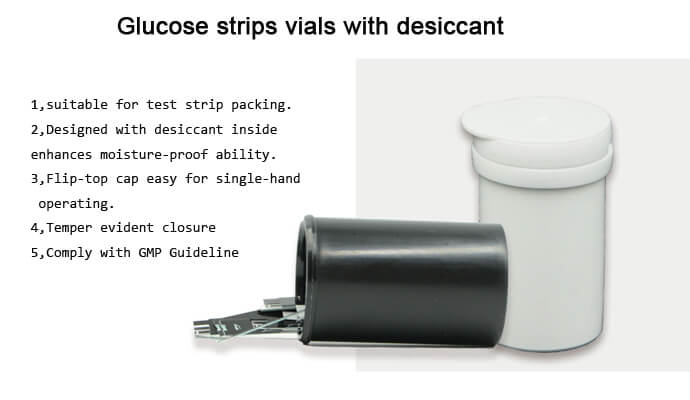
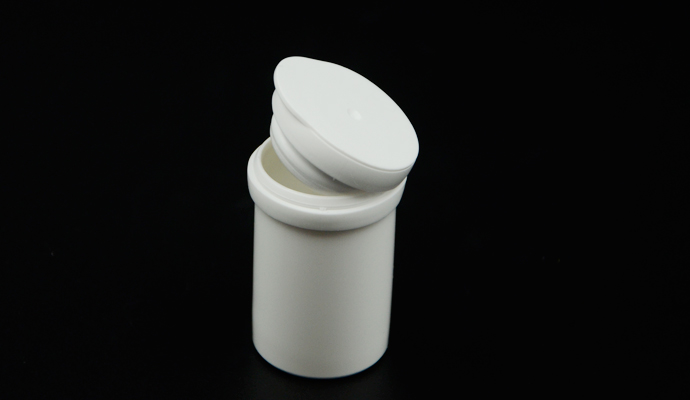
 The test strip vial is mainly used for the storage of urine sugar test strips, and most test strips require a desiccant evenly, so the test strip tube stores the desiccant in the bottle cap. The cap is made of moisture-proof and capped to ensure the validity of the test strip.

What does test strip vial store

glucose test strip container


Urine sugar test paper is a special test paper used by urine sugar patients to check their urine sugar. According to the catalysis of glucose oxidase to form gluconic acid and hydrogen peroxide, hydrogen peroxide forms water and atomic oxygen under the catalytic action of catalase, and atomic oxygen can oxidize certain colorless compounds into colored The principle of the compound is to fix the above two enzymes and a colorless compound on a paper strip to prepare an enzyme test paper for testing the urine sugar content.

Urine sugar reflects the average blood glucose concentration during urine collection. Glucose is filtered out in the glomerulus and is actively reabsorbed in the proximal tubule. Immerse the end of the reagent strip with the reagent into a container containing fresh urine, and take it out after about 2 seconds. Compare the color of one end of the test strip reagent with the standard colorimetric plate on the test strip, and the color can be the same. Probably determine the content of urine sugar.

Monday, March 2, 2020

Test strip accuracy

You may have heard that glucose meters aren’t always accurate.
Studies have shown that the accuracy of diabetes test strips can vary. Researchers tested the accuracy of 18 blood glucose monitoring systems in three studies. Here’s some of what they found:

Test strip accuracy
Six of the systems met the standard for accuracy in all three studies.
Five met the standard in two studies.
Three met the standard in one study.
Four didn’t meet the standard for accuracy in any of the studies.
The good news is that the FDA now calls for all new blood glucose meter readings to be within at least 15% of the lab’s measurements. This means your reading must be accurate at least 19 times out of 20. And all new studies must have at least 350 people with diabetes, more than originally required.

Wednesday, January 8, 2020

How to confirm accuracy test strips

Even though the manufacturers strive to be as accurate as possible, there is always a margin of error. According to the Food and Drug Administration Department regulations for all blood glucose test glucometer:
For result at or above 75 mg/dl (4.2 mmol/l), 95% of the meter test outcomes must be within ±20% of the actual blood glucose level. For example, if your meter reads 100, your actual glucose level can actually be anywhere between 80 to 120.

How to confirm accuracy test strips

For results below 75 mg/dl: 95% of the test results must be within plus or minus 15 points of the actual blood glucose level. So a reading of 70 only gives an indication that your actual glucose level is anywhere between 55 to 85.
This is the unfortunate trade-off for having equipment that is both small and easy to use. Given that there is a margin of error, almost all glucometers are close to being equally accurate. In addition, there are other factors that may play a role in the accuracy of test strips:
Sellers’ method of storing the test strips may contribute to the accuracy of the strips. As explained earlier, humidity and temperature will affect how well the enzymes in the test strip work. If they keep the test strips in a hot warehouse, no wonder you will hear reviewers complaining that the readings are very inaccurate.
How consumers use and store their test strips will affect the accuracy of the test strips. Improper storage and use, rough handling of the test strips, and expired test strips are some of the most common sources of error in-home blood glucose monitoring. Another common mistake is to use one brand of test strips on a different brand glucometer.

Wednesday, January 1, 2020

Suitable storage for glucose test strips

Glucose tests strips need dry and seal container to storage, the container must keep them away from moisture and humidity.  The bottle cap must have a desiccant to absorb and absorb water molecules to keep the test strip in an effective position without deterioration; secondly, it adopts a flip-top design for easy opening.

Suitable storage for glucose test strips
Blood glucose test strips play a crucial role in helping you to monitor your daily blood glucose level and giving your doctor the data to adjust your medication to control your diabetes symptoms.